
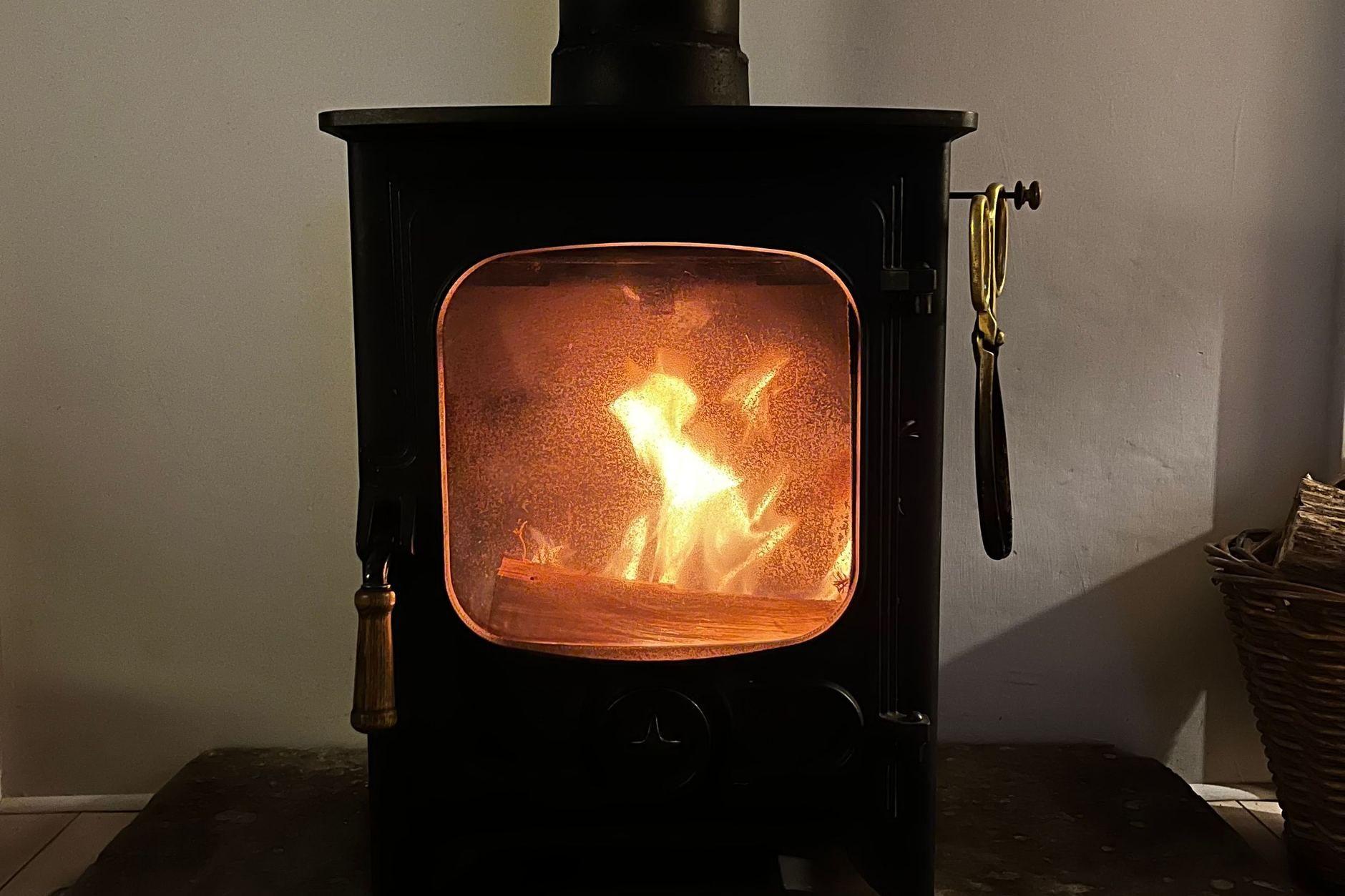
Most of the fireplaces we open in Lomita are not masonry at all. Behind the brick-look facing sits a steel box built in a factory, set into a wood frame when the house went up, with a metal pipe climbing to the roof. Repairing one is a parts job more than a masonry job, and the cost follows the parts.
This guide covers what usually breaks on a factory-built fireplace, what decides the price of putting it right, and the point where repairing stops making sense. It is written for owners who already know something is wrong and want to know what they are about to pay for.
Why a prefab repair is priced differently from brick
A brick fireplace can be mended with any sound brick, firebrick and mortar that suits it. A factory-built unit was tested by its maker as one assembly: firebox, refractory panels, damper, pipe, spacers, firestops and the cap on the roof. The listing that came out of that test, usually to the UL 127 standard for factory-built fireplaces, covers that assembly and the parts named in its installation manual. Fit a part the maker never listed and the fireplace is no longer the one that passed.
So the first question on any prefab repair is not how bad it is but which model it is. We read the data plate, usually found inside the firebox, behind the screen or on the smoke dome, and from there the job is about finding the listed part, checking it is still sold and fitting it the way the manual says.
The repairs we see most on factory-built units
These jobs make up most of our prefab repair work around Lomita, Rolling Hills Estates, Gardena and Compton.
- Refractory panels. The boards lining the back and sides of the firebox take the heat. Hairline cracks are common and often within what the maker allows. A panel broken through, crumbling at the base or showing bare steel behind it is replaced with the panel set listed for that model.
- Damper. The blade and its handle sit at the top of the firebox. Linkages bend, pins wear and blades warp after years of hot fires. Some models take a whole replacement damper assembly; others only a new handle or pin.
- Glass doors and screens. Doors added later from another brand are a frequent finding, because the unit was tested with its own doors or with none. Bent screens and missing mesh panels are simpler fixes.
- Grate and floor. A missing or oversized grate lets logs lean on the panels, which is how many panels crack in the first place.
- Pipe joints and firestops. In the attic, pipe sections can work apart, and the metal firestop where the pipe passes a ceiling is sometimes missing after a roof or insulation job.
- The top of the system. The termination cap, the storm collar and the chase top each have their own guide: listed caps compared with generic ones and chase tops, reseal or replace.
What decides the price
There is no single figure for a prefab repair, and anyone who gives one over the phone is guessing at the model. Four things set the cost.
- The part itself. Panel sets, damper assemblies and doors are sold per model. Some are stocked by suppliers, some are made to order and some are no longer made.
- Access. Panels come out from the front. Pipe work happens in the attic or inside the chase, and a chase with no access panel may need one cut and closed again.
- How many parts share the fault. A cracked rear panel alone is a small job. A cracked rear panel plus a warped damper plus a non-listed door is three parts and three orders.
- Whether the unit is still supported. If the maker has closed or dropped the model, we look for a part from another supplier that is listed for it. When none exists, the repair route ends and the question becomes replacement.
Where this site publishes a price, that is the figure you pay. A fitted termination cap gets its figure after we measure, since its size, its material and the chimney it sits on all change the cost. A gas insert set into a firebox that allows one runs $2,650 to $5,300. Panels, dampers, doors and pipe sections depend on the part number, so we write their figure down once the part is identified and before any work starts.
If you already know something has failed, tell us in the form the brand on the data plate and which part looks wrong. If you cannot find a plate, say so; we read it on the visit.
When replacing the fireplace costs less than repairing it
Replacement is sometimes the cheaper route, and an honest report says so instead of stacking up part orders. Three situations point that way.
The first is a discontinued unit with a failed part and no listed substitute. Nothing can be fitted that keeps the listing, so a repair would only be a patch the next inspector fails.
The second is several failures at once on an older unit: panels, damper and pipe all needing work. Each part is a separate order, and the total can approach the cost of a new listed fireplace sized to the existing framing.
The third is an owner who no longer burns wood. Some fireboxes accept a gas insert tested for that use, at $2,650 to $5,300. Many do not, and the data plate and manual decide which kind yours is.
What you get before any work
Every repair starts with a written list: the model, each failed part, the listed replacement and its figure, and anything we could not identify. You decide what goes ahead. If the fireplace should not be lit until a repair is done, we tell you that in plain words and put it at the top of the list.
For a house being sold, or a fireplace nobody has looked at in years, the camera is often the right start. A Level 2 inspection is $370 and follows the pipe from firebox to cap; a Level 1 at $52 covers what can be reached from the room and the roof. The fireplace inspection page explains which one fits, and owners already holding a failed report can start from the up to code repairs page.
Questions owners ask about prefab repairs
Can a factory-built fireplace be relined or rebuilt in brick? No. The firebox and pipe are a tested set. Masonry work does not apply to them, and a mason's patch in a metal firebox is a common reason a unit fails inspection.
Is a cracked panel dangerous? It depends on the crack. Hairline lines on a panel that is otherwise whole are usually acceptable to the maker. A panel broken through lets heat reach the steel shell and the framing behind it, and the fireplace should stay unlit until it is replaced.
Do you work on gas units too? Yes. Gas fireplaces have their own listed parts, from the burner to the glass, and the gas fireplace repair page covers them. Wood units are on the fireplace repair page.
Booking a repair visit
Head to the contact page with the address and a line on what the fireplace is doing, and we will come out, read the plate and put the repair on paper, in Lomita or the towns around it.
Have a Fireplace Like This One?
Lattimore Chimney Solutions reads the plate on the unit, names the worn parts and prices each one before anything is ordered. We work from Lomita across Rolling Hills Estates, Gardena, Compton and the other cities on our list.